
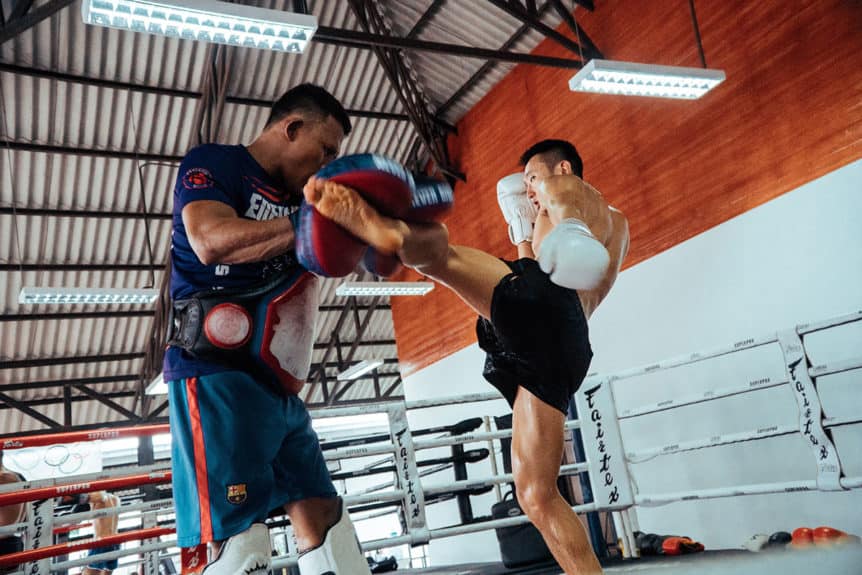
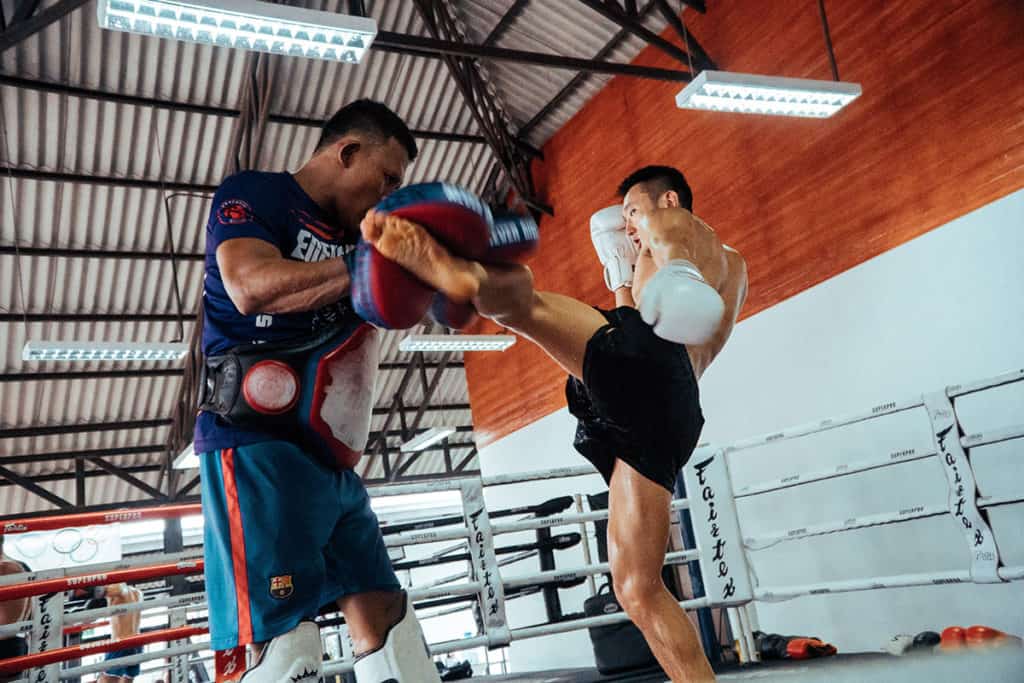
Taekwondo is a Korean martial art and Olympic sport built around fast, high and spinning kicks, with forms, belt ranks and a code of conduct. Kickboxing is a combat sport that mixes boxing punches with kicks, fought in a ring under several rule sets. Taekwondo scores points with kicks to the head and body; kickboxing is decided by knockouts, rounds and punches to the head. This guide compares their origins, techniques, rules and training, and helps you decide which suits you.
| Taekwondo | Korean martial art and Olympic sport; kick-focused, with forms, belts and etiquette |
|---|---|
| Kickboxing | Striking combat sport; boxing punches plus kicks, fought in a ring |
| Same thing? | No. They share kicks and punches but differ in rules, aims and training |
| Head punches | Not allowed in Olympic taekwondo; a main weapon in kickboxing |
| Better for | Taekwondo: kicking skill, flexibility, kids, belt goals. Kickboxing: boxing, conditioning, ring fighting |
Side by side
Taekwondo vs kickboxing: key differences
| Taekwondo | Kickboxing | |
|---|---|---|
| Origin | Korea, 1940s and 1950s | Japan in the 1960s; American kickboxing in the 1970s |
| Main focus | Kicks, especially high, jumping and spinning kicks | Punches and kicks in combination, with a boxing base |
| Hands | Punches to the body only in Olympic sparring | Full boxing: jab, cross, hook and uppercut to the head and body |
| Stance | Side-on, bouncing, lead leg up for kicking | Squarer, hands high, built to punch and defend |
| Forms and belts | Poomsae or tul, colored belts and black belt dan ranks | Usually none; some gyms use grades or levels |
| Competition | Points on an 8 m mat, electronic body and head protectors | Rounds in a ring, gloves, won by knockout or decision |
| Governing bodies | World Taekwondo, ITF, ATA | WAKO (amateur), ISKA, WKA, IKF and pro promotions |
| Olympic sport | Yes, a full medal sport since 2000 | No |
Same thing?
Is taekwondo kickboxing?
No. Taekwondo and kickboxing both punch and kick, and many fighters train in both, but they are different arts. Taekwondo is a traditional martial art with forms, belt ranks, self-defense and etiquette, and its sport side is scored on points with almost no punching to the head. Kickboxing is a combat sport. It has no forms or belt tradition in most gyms, and fights are won by hurting the opponent with punches and kicks over several rounds.
The confusion is partly history. Many of the first American kickboxers came from karate and taekwondo, and some taekwondo schools now run cardio kickboxing or “Korean kickboxing” classes. Those are fitness classes, not a separate style.
History
Where taekwondo comes from

Taekwondo grew out of the kwans, martial arts schools that opened in Korea after Japanese rule ended in 1945. Their founders drew on karate, which several had learned in Japan, along with Korean kicking traditions such as taekkyeon. In 1955 the name taekwondo was adopted, an idea promoted by General Choi Hong Hi, who later founded the ITF. The Kukkiwon opened in 1972 and the World Taekwondo Federation (now World Taekwondo) followed in 1973. Taekwondo was a demonstration sport at the 1988 Seoul Olympics and became a full Olympic event at Sydney 2000. See the history of taekwondo for more.
History
Where kickboxing comes from
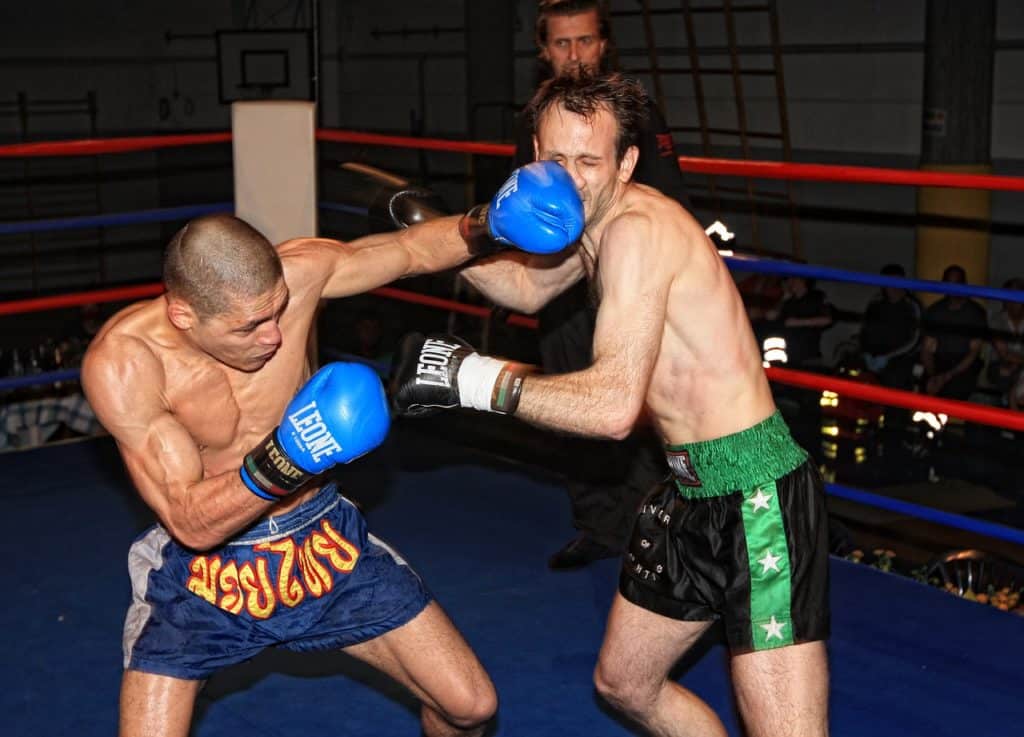
Kickboxing has two starting points. In Japan, promoter Osamu Noguchi mixed karate with Muay Thai and named the result kickboxing; the first event under that name was held in Osaka in 1966. Japanese kickboxing allows low kicks and knees, and it shaped the K-1 promotion, which began in Japan in 1993, and the Dutch style that grew out of it.
American kickboxing came from karate and taekwondo fighters who wanted full contact instead of point sparring. On January 17, 1970, Joe Lewis knocked out Greg Baines in the second round at the Pro Team Karate Championships, a bout billed as full contact and called kickboxing by the announcers. The Professional Karate Association (PKA) held its first championships in 1974, and stars such as Bill “Superfoot” Wallace, who gave up the PKA middleweight title undefeated in 1980, and Benny “The Jet” Urquidez made the sport popular. Chuck Norris, who later founded Chun Kuk Do, promoted the team-based World Combat League in the 2000s.
Today amateur kickboxing is run internationally by WAKO (the World Association of Kickboxing Organizations), which the IOC fully recognized in 2021. Kickboxing is not on the Olympic program. Professional titles come from sanctioning bodies such as ISKA, WKA and the International Kickboxing Federation, and from promotions such as Glory and ONE Championship.
Rule sets
Types of kickboxing
| Style | What is allowed |
|---|---|
| Full contact (American)The original US style | Punches, and kicks above the waist. No low kicks, knees, elbows or clinching |
| Low kickInternational rules | Punches and kicks, including kicks to the legs. No elbows |
| K-1 rulesJapan and the Netherlands | Punches, high and low kicks, and knees. No elbows; clinching is limited |
| Point fightingSemi-contact | Controlled punches and kicks for points, with play stopped after each score |
| Muay ThaiRelated, not kickboxing | Adds elbows, knees and a full clinch |
If you are comparing taekwondo with Thai boxing, see taekwondo vs Muay Thai.
Techniques
Techniques: kicks vs punches
Taekwondo is known for its legs. Students train the front, roundhouse, side, back and hook kicks, then jumping and spinning versions, and sparring rewards fast kicks to the body and head. Hand techniques are trained in forms and self-defense but used less in sport sparring, since punches to the head are not allowed. See taekwondo kicks and sparring combinations.
Kickboxing is built on boxing. The jab, cross, hook and uppercut come first, and kicks are thrown in combination with them. The roundhouse kick is the main kick, usually thrown with the shin rather than the foot, plus the teep or front kick and, in low-kick and K-1 rules, kicks to the legs. Jumping and spinning kicks are rarer, because they leave you open to counter-punches.
| Technique | Taekwondo (WT) | Kickboxing |
|---|---|---|
| Punch to the head | Not allowed | Allowed, main weapon |
| Punch to the body | Allowed, 1 point | Allowed |
| Kick to the body | Allowed, 2 points | Allowed |
| Kick to the head | Allowed, 3 points | Allowed |
| Spinning kicks | Encouraged, extra points | Allowed, used less |
| Kicks to the legs | Not allowed | Low-kick and K-1 rules only |
| Knees | Not allowed | Allowed in K-1 rules |
Competition
Taekwondo sparring rules
- Area: an 8 m contest area, often octagonal, on a mat.
- Rounds: three rounds of two minutes with a minute’s rest. Senior events use a best-of-three format, where you win two rounds to win the match.
- Scoring: 1 point for a punch to the body protector, 2 for a kick to the body and 3 for a kick to the head, with extra points for turning kicks. Electronic body and head protectors register most points.
- Targets: the body protector and the head. Head attacks must be kicks, and nothing below the waist is allowed.
- Penalties: each penalty (gam-jeom) gives the opponent a point, for things like grabbing, pushing, falling or stepping out.
- Winning: by points, by knockout or referee stop, or by disqualification.
See taekwondo sparring and tournament rules for the full breakdown, and how to prepare for a tournament.
Competition
Kickboxing rules
- Area: usually a boxing-style ring.
- Gear: boxing gloves, mouthguard and groin guard; amateurs also wear headgear and often shin guards.
- Rounds: amateur bouts are usually short, around three rounds of two minutes. Pro bouts use three-minute rounds and can run more rounds for titles.
- Techniques: depend on the rule set, from kicks above the waist only in full contact to low kicks and knees in K-1 rules.
- Scoring: judges score each round on clean strikes, damage and control, much like boxing.
- Winning: by knockout, technical knockout, judges’ decision or disqualification.
Training
How training differs
A taekwondo class usually starts with a bow, then warm-up and stretching, basic kicks and blocks, forms, and sparring or self-defense drills. You test for belts, and the path to black belt and the dan levels takes years. Classes often include children, and etiquette and respect are part of the curriculum.
A kickboxing class looks more like a boxing gym: skipping, shadowboxing, pad work, heavy bags, conditioning and, for those who want it, hard sparring. There are usually no forms or uniforms, and many people train only for fitness. Fighters who compete spar with more contact than most taekwondo students.
Note
This is general information, not medical advice. Both are demanding, and hard sparring with head contact carries a risk of injury. If you have health concerns or have not exercised in a while, check with your doctor before starting, and wear proper protective gear.
Which to choose
Taekwondo or kickboxing: which is better?
Neither is better overall. They train different things, so the better choice depends on your goals, and a good instructor matters more than the style name.
Taekwondo
Choose taekwondo if
You love kicking, want flexibility and leg speed, like belt goals and forms, or want an Olympic-style sport.
Kickboxing
Choose kickboxing if
You want to learn to box and kick together, want hard conditioning, or want to fight in a ring.
Self-defense
For self-defense
Kickboxing’s hand skills and contact sparring carry over well. Taekwondo’s long kicks are a strength if your school also drills punching and close range.
Kids
For children
Taekwondo is usually the easier start, with structured classes, belts and light-contact sparring. Many kickboxing gyms are aimed at adults.
You do not have to pick only one. Many taekwondo students add kickboxing to improve their hands, and many kickboxers borrow taekwondo kicks. See combining taekwondo with other martial arts, taekwondo for MMA and taekwondo vs karate.
FAQ
Frequently asked questions
Is taekwondo and kickboxing the same?
No. Both use punches and kicks, but taekwondo is a Korean martial art focused on kicks, with forms and belts, while kickboxing is a ring sport built on boxing punches combined with kicks.
Which is better, taekwondo or kickboxing?
Neither is better overall. Taekwondo is better for kicking skill, flexibility and structured classes; kickboxing is better for punching, conditioning and full-contact fighting.
Is taekwondo better than kickboxing for self-defense?
Kickboxing has the edge in hand skills and contact sparring. Taekwondo can work well too, especially at schools that train punching, close range and realistic self-defense.
Can you punch to the head in taekwondo?
Not in World Taekwondo sparring. Punches only score to the body protector, and head attacks must be kicks. Some other taekwondo rule sets, such as ITF, allow punches to the head.
Is kickboxing an Olympic sport?
No. Its international amateur body, WAKO, has been fully recognized by the IOC since 2021, but kickboxing is not on the Olympic program. Taekwondo has been a full Olympic sport since 2000.
Can I train taekwondo and kickboxing at the same time?
Yes. Many people do, and the skills support each other: kickboxing improves your hands and defense, and taekwondo improves your kicks and footwork.
The short version
Taekwondo is a Korean martial art and Olympic sport focused on high, fast kicks, with forms and belts; kickboxing is a ring sport that combines boxing punches with kicks. They are not the same thing. Choose taekwondo for kicking, flexibility and structure, kickboxing for hands, conditioning and contact, or train both.