
To kick faster in taekwondo, fix your technique first: chamber the knee quickly, turn the hips, keep the leg relaxed until impact and snap it back. Then build the qualities behind speed: flexible hips and …

Kicks, blocks, stances, stretching and conditioning: how to train each technique and build the fitness taekwondo needs.
To kick faster in taekwondo, fix your technique first: chamber the knee quickly, turn the hips, keep the leg relaxed until impact and snap it back. Then build the qualities behind speed: flexible hips and …

The best diet for taekwondo is built on plenty of carbohydrates for energy, enough protein spread through the day for recovery, healthy fats, lots of fruit and vegetables, and steady hydration. Timing matters too: a …

Taekwondo is trained barefoot for practical and traditional reasons. In Korea, as in much of East Asia, people take their shoes off indoors, and the dojang follows that custom out of respect. Bare feet also …

When envisioning training in Taekwondo or any of the martial arts, you probably assume that you need to work on your strength, flexibility and self-discipline in order to succeed. This is true, and there are …
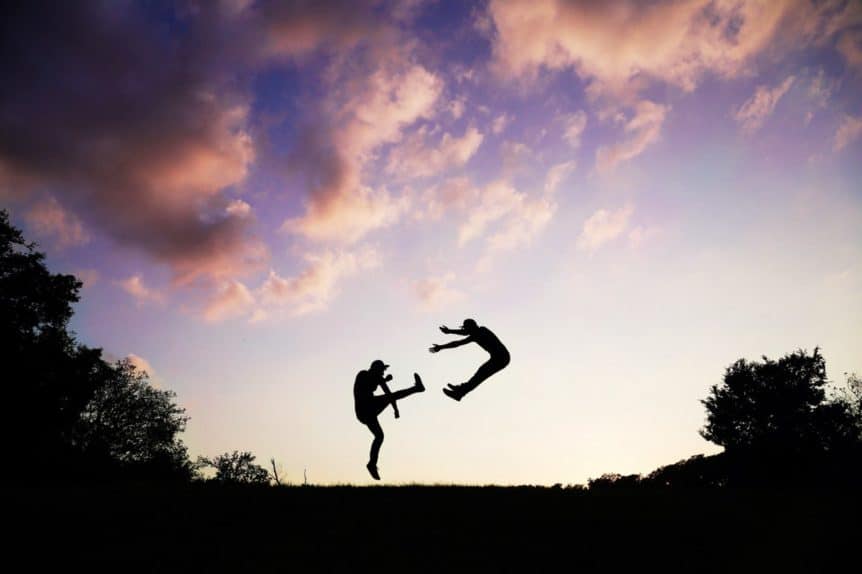
The main taekwondo kicks are the front kick (ap chagi), side kick (yeop chagi), roundhouse or turning kick (dollyeo chagi) and back kick (dwi chagi), plus the hook kick (huryeo chagi), axe kick (naeryeo chagi) …

Taekwondo blocks, called makgi in Korean, stop or redirect an attack with the forearm, the knife edge of the hand or the palm. Beginners learn four basic blocks first: the low block (arae makgi), the …

The most common taekwondo injuries are bruises (contusions), ankle and foot sprains, toe injuries, and muscle strains in the hamstrings, groin and hip flexors, followed by knee injuries and, in sparring, head injuries such as …