
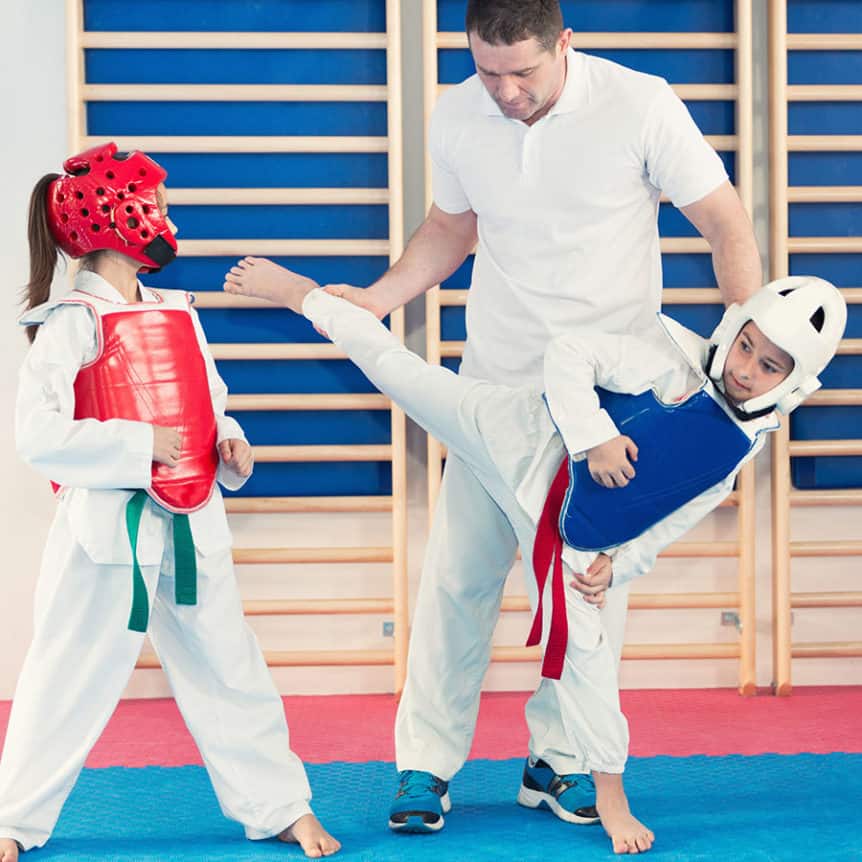
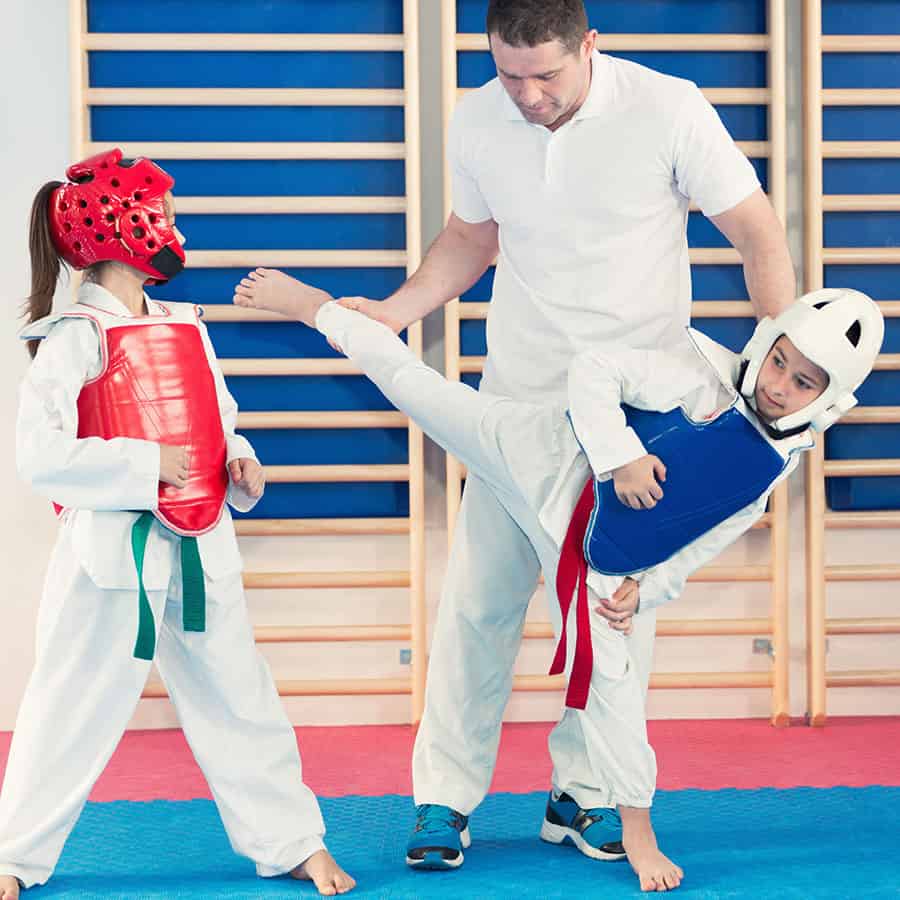
There are two main types of taekwondo: World Taekwondo (WT) style, also called Kukkiwon or Olympic taekwondo, and ITF style, the system created by General Choi Hong Hi. Most other styles, such as ATA Songahm taekwondo in the United States, the GTF, the TAGB in the UK and Rhee Taekwon-Do in Australia, grew out of one of these two. The styles share the same basic kicks, punches and blocks, but they differ in their forms, sparring rules, uniforms and focus. This guide explains each main style and how to choose between them.
| Two main styles | World Taekwondo / Kukkiwon and ITF |
|---|---|
| Olympic style | World Taekwondo (formerly WTF), an Olympic sport since 2000 |
| ITF | Founded by Choi Hong Hi in Seoul in 1966; 24 patterns; semi-contact sparring |
| Other large styles | ATA (Songahm), GTF, TAGB, Rhee Taekwon-Do, independent traditional schools |
| What differs | Forms, sparring rules, contact level, uniforms, ranks |
| What matters most | The quality of the instructor and school |
Side by side
Taekwondo styles compared
| Style | Forms | Sparring | Best known for |
|---|---|---|---|
| World Taekwondo / Kukkiwon | Taegeuk and black belt poomsae | Full contact, electronic scoring, body protectors | Olympic sport, fast kicking |
| ITF | 24 Chang Hon patterns (tul) | Semi-contact, continuous, punches to the head allowed | Traditional patterns, sine wave motion, power |
| ATA (Songahm) | Songahm forms | Point sparring at ATA tournaments | Large US school network, family programs |
| GTF | ITF patterns plus its own | ITF-style | An ITF offshoot with its own syllabus |
| TAGB | ITF-style patterns | ITF-style | One of the largest taekwondo associations in the UK |
| Rhee Taekwon-Do | Chang Hon patterns | Step sparring and mostly non-contact free sparring | Long-established schools in Australia and New Zealand |
The big two
World Taekwondo (Kukkiwon) style
World Taekwondo, known as the World Taekwondo Federation (WTF) until 2017, runs taekwondo as an Olympic sport. The Kukkiwon in Seoul, founded in 1972, sets the curriculum and issues dan and poom certificates. Students learn the eight Taegeuk forms and nine black belt poomsae, and competition sparring is full contact with electronic scoring: kicks to the body and head, punches to the body only. It is the most widely practiced style and the one to choose if you want to compete in Olympic-style events. See Olympic taekwondo and poomsae.
ITF style
The International Taekwon-Do Federation was founded in Seoul in 1966 by General Choi Hong Hi, who later moved its headquarters abroad. After his death in 2002, the ITF split into three separate organizations that all teach his system. ITF taekwondo uses 24 patterns (tul), the sine wave method of generating power and semi-contact sparring with hand and foot pads, where punches and kicks to the head are allowed but full-force blows are not. Many traditional and self-defense-focused schools teach ITF style. See ITF belt order.
Other styles
Other taekwondo styles and organizations
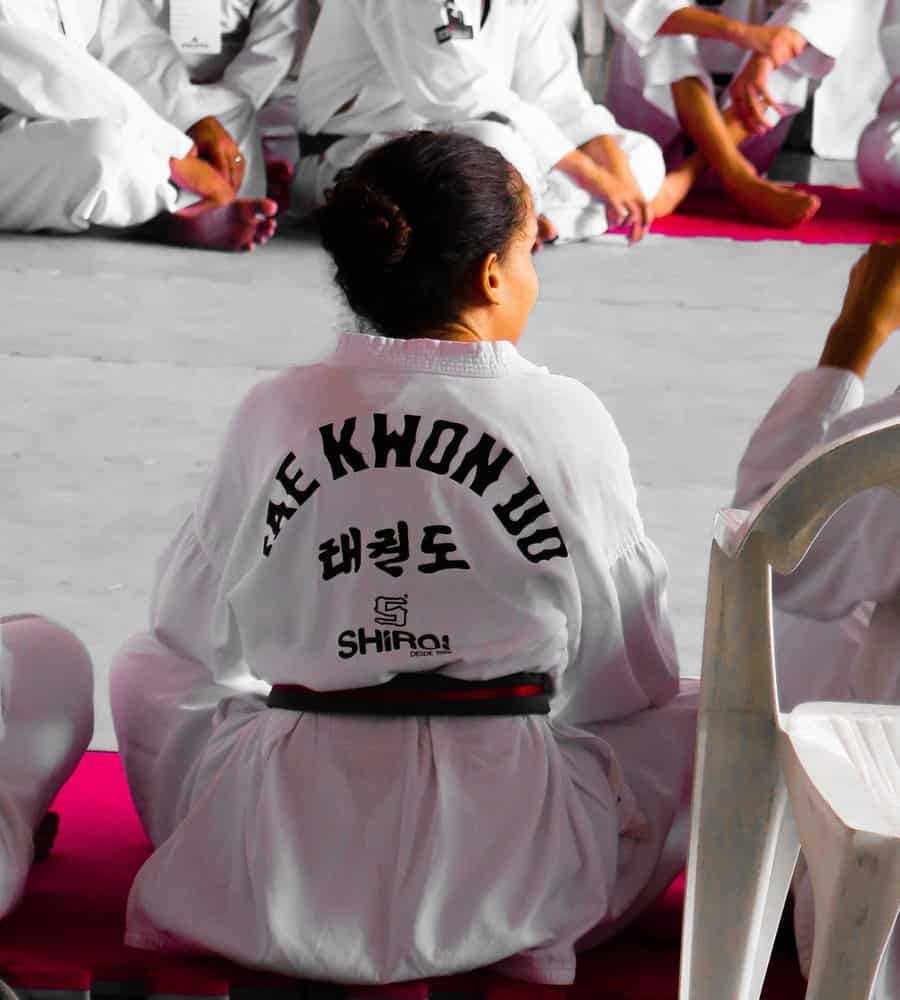
- ATA (Songahm taekwondo): the American Taekwondo Association was founded in 1969 by Haeng Ung Lee in Omaha, Nebraska, and is based in Little Rock, Arkansas. It teaches its own Songahm forms and runs a large network of schools. See ATA belt order.
- GTF: the Global Taekwondo Federation, an offshoot of the ITF with its own additional patterns.
- TAGB: the Taekwondo Association of Great Britain, a large UK association teaching ITF-style patterns and sparring.
- Rhee Taekwon-Do: founded in Australia in the mid-1960s by Chong Chul Rhee, one of the original taekwondo masters. It uses the Chang Hon patterns and focuses on step sparring and mostly non-contact free sparring.
- Independent and traditional schools: many schools mix Kukkiwon, ITF and older kwan teaching, or add self-defense from other arts.
Note
Belts usually do not transfer directly between organizations. If you switch styles, expect to learn new forms and possibly retest for your rank.
Choosing
How to choose a taekwondo style
Competition
Want to compete?
World Taekwondo style offers the clearest path, from local tournaments to national teams and the Olympics.
Tradition
Like forms and history?
ITF schools and many traditional schools put more weight on patterns, power and self-defense.
Family
Training as a family?
Look for schools with kids, teen and adult classes; ATA and many independent schools are built around family programs.
Contact
Prefer light contact?
ITF-style and non-contact schools may suit you better than full-contact Olympic sparring.
In practice, the school near you and its instructor matter more than the style. Visit, watch a class and take a trial lesson before deciding.
- Ask which organization the school belongs to and who certifies its black belts.
- Watch how instructors treat beginners and children.
- Check class times, cost and contracts.
- Ask if sparring is required and what contact level is used.
More help: how to find a good taekwondo school, how much taekwondo costs, taekwondo for adults, taekwondo for kids and what beginners learn first.
Related Korean arts: Tang Soo Do vs taekwondo and hapkido vs taekwondo. For the history behind the styles, see what taekwondo is and where it comes from.
FAQ
Frequently asked questions
What are the two main types of taekwondo?
World Taekwondo (Kukkiwon) style, which is the Olympic version, and ITF style, the system created by General Choi Hong Hi.
What is the difference between WT and ITF taekwondo?
WT uses Taegeuk and Kukkiwon poomsae and full-contact sparring with electronic scoring and no head punches. ITF uses 24 patterns, the sine wave motion and semi-contact sparring with punches to the head allowed.
Which taekwondo style is in the Olympics?
World Taekwondo style, governed by World Taekwondo (formerly the WTF). It has been a full Olympic sport since 2000.
How many styles of taekwondo are there?
There are two main styles, WT and ITF, plus many organizations that grew from them, such as the ATA, GTF, TAGB and Rhee Taekwon-Do, and many independent schools.
Which taekwondo style is best for self-defense?
Any style can teach useful self-defense. ITF and traditional schools often spend more time on hand techniques and self-defense drills, but the instructor matters more than the style.
What does TKD stand for?
TKD is a common abbreviation for taekwondo.
The short version
The two main types of taekwondo are World Taekwondo (Kukkiwon, the Olympic style) and ITF (Choi Hong Hi’s system). WT focuses on full-contact sport sparring and Taegeuk forms; ITF on 24 patterns and semi-contact sparring. Other styles such as the ATA, GTF, TAGB and Rhee Taekwon-Do grew from these. Pick a style that fits your goals, but choose the school and instructor first.