
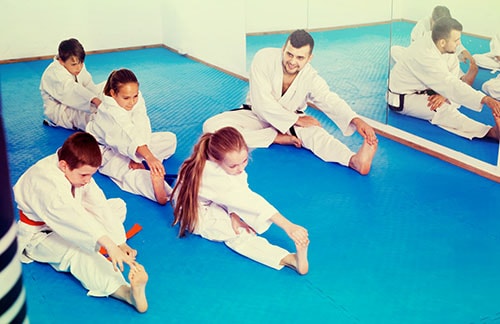
Taekwondo gives kids more than kicks and punches. A good class builds confidence, self-discipline, focus, fitness and respect, and it teaches children to set goals, handle setbacks and stay out of fights. Progress is personal: each child works toward the next belt at their own pace, which suits kids who do not enjoy team sports as well as those who do. This guide covers the main benefits of taekwondo for kids, what a children’s class looks like and what parents should check before signing up.
| Main benefits | Confidence, self-discipline, focus, fitness, respect, goal setting |
|---|---|
| What kids learn | Kicks, punches, blocks, stances, forms, sparring and class etiquette |
| How progress works | Colored belts earned at tests, building toward black belt |
| Values taught | The five tenets: courtesy, integrity, perseverance, self-control, indomitable spirit |
| Starting age | Many schools run classes for children from about age 4 or 5 |
| Before you enroll | Watch a class, meet the instructor, ask about gear, cost and contracts |
Benefits
Benefits of taekwondo for kids
Confidence
Self-esteem from real achievements
Learning a new form, passing a belt test or breaking a board gives kids proof that hard work pays off. They compete mainly against their own last performance.
Discipline
Self-discipline and control
Standing still at attention, waiting for commands and repeating a technique until it is right teach patience and control that carry over to school and home.
Focus
Better concentration
Forms and drills demand attention to detail. Kids learn to listen, remember a sequence and block out distractions.
Fitness
Strength, flexibility and endurance
Kicking drills, stretching, footwork and conditioning build all-round fitness, balance and coordination, in a way most kids find fun.
Respect
Courtesy toward others
Students bow to instructors and partners, address adults politely and learn to treat every classmate with respect, whatever their rank.
Resilience
Learning from setbacks
Not every test or sparring match goes well. Kids learn to talk through what went wrong with the instructor, practice and try again.
Goals
Goal setting
Each belt is a clear, reachable target on the way to black belt. Children learn to break a big goal into steps and stick with it.
Friends
Social skills and teamwork
Partner drills, group warm-ups and cheering classmates at tests help shy children make friends and work with others.
Safety
Self-defense and avoiding fights
Kids learn basic self-defense along with the rule that walking away is the first choice. Good schools teach control, not aggression.
Fun
An active hobby kids enjoy
Games, pads, team challenges and new skills to show off keep children coming back, and a habit of exercise is easier to keep when it is fun.
Values
The values kids hear in every class
Many schools teach the five tenets of taekwondo and ask children to recite them: courtesy, integrity, perseverance, self-control and indomitable spirit. Instructors link them to daily life, such as finishing homework (perseverance) or staying calm when a sibling is annoying (self-control). For the meaning of each tenet, see the 5 tenets of taekwondo, and for class etiquette, bowing in taekwondo.
In class
What a kids taekwondo class looks like
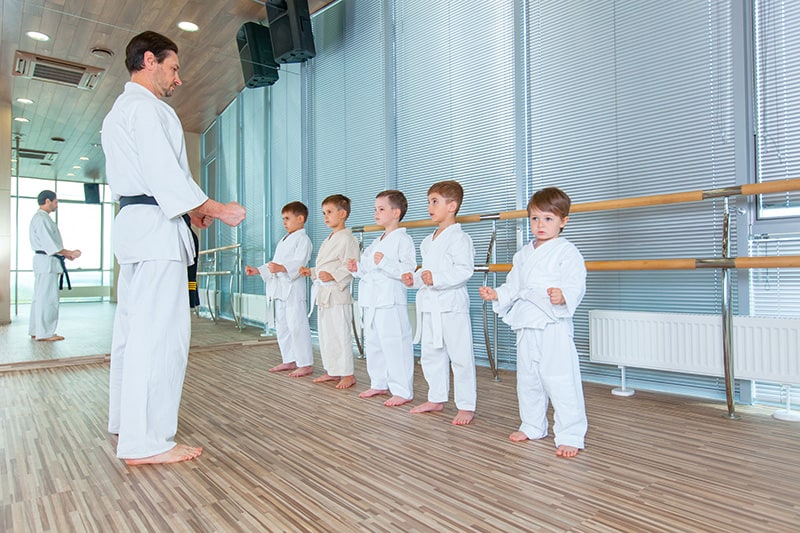
Classes differ between schools, but most follow a similar pattern.
- Line up by rank, bow in and greet the instructor.
- Warm-up and stretching, often with games for younger children.
- Basics: stances, blocks, punches and kicks, counted in Korean.
- Forms (poomsae) for the next belt.
- Pad drills, partner work and, for older or higher-ranked students, sparring with protective gear.
- A short talk about a value such as respect or perseverance.
- Line up, bow out and dismiss.
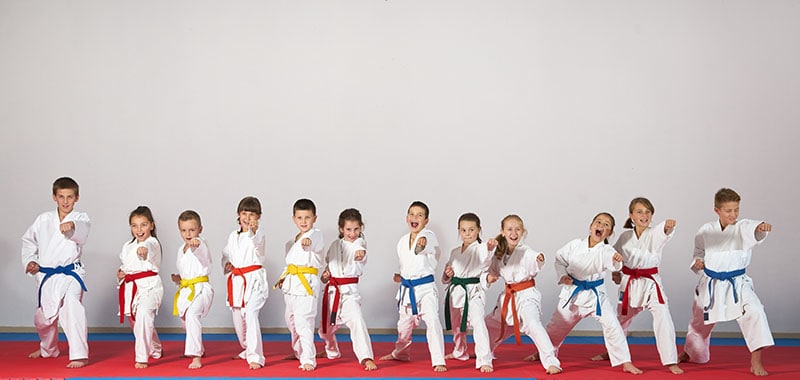
Children earn colored belts by passing tests every few months, showing their forms, basics and sometimes breaking or sparring. See the taekwondo belt order, black belt and junior black belt ranks, how to tie a belt and what beginners learn first.
Fit
Is taekwondo a good fit for your child?
| Taekwondo | Typical team sport | |
|---|---|---|
| How progress is measured | Personal: belts earned at the child’s own pace | Team results and playing time |
| Season | Year-round | Usually seasonal |
| Who they train with | Mixed group, often grouped by age and rank | The same team all season |
| Main skills | Coordination, flexibility, self-control, self-defense | Sport-specific skills, team play |
| Good for | Shy kids, energetic kids, kids who prefer individual goals | Kids who enjoy team competition |
Many families combine the two. If you are weighing martial arts, see taekwondo vs karate and the main taekwondo styles.
For parents
What parents should check before enrolling
Note
This is general information, not medical advice. If your child has a health condition or injury, check with their doctor before starting a new sport.
- The instructor: a certified black belt with experience teaching children; ask about safety training and background checks.
- Class size and grouping: enough instructors for the number of kids, and classes split by age or level.
- Safety: padded floors, protective gear for sparring and light, controlled contact for young children.
- A trial class: most schools offer one; watch how instructors speak to the kids and how engaged the kids look.
- Cost and contracts: ask about monthly fees, testing fees, uniform and gear costs, and how to cancel.
- Age: classes for preschoolers focus on listening, balance and coordination more than technique.
More help for parents: the best age to start taekwondo, how much taekwondo costs, how to find a good taekwondo school and sparring gear for kids.
Common worry
Will taekwondo make my child aggressive?
A well-run school teaches the opposite. Children learn that techniques are for class, tests and real self-defense only, and that avoiding a fight comes first. Sparring has rules, gear and a referee, and students who lose control are corrected or sat out. The respect and self-control taught in class are meant to show up at school and at home. If a school encourages bullying behavior or hard contact for young children, look for another one.
FAQ
Frequently asked questions
What age can kids start taekwondo?
Many schools take children from about age 4 or 5, with short classes built around listening, balance and simple kicks. Older children can start at any age.
Is taekwondo good for shy kids?
Often, yes. Everyone starts as a white belt, progress is personal, and small wins at each belt test build confidence in a supportive group.
How often should kids train?
Many schools suggest two or three classes a week. Regular attendance matters more than the number of classes.
Is taekwondo safe for kids?
In a well-run school, yes. Classes use mats, protective gear for sparring and controlled contact, and young children do little or no hard contact.
How long does it take a child to earn a black belt?
It varies by school and by how often the child trains, but it usually takes several years. Under Kukkiwon rules, children under 15 earn a poom (junior black belt) rank.
Is taekwondo or karate better for kids?
Both teach discipline and respect. Taekwondo focuses more on kicks and has Olympic-style sparring; karate uses more hand techniques. The instructor and school matter more than the style.
The short version
Taekwondo helps kids build confidence, self-discipline, focus, fitness and respect, and teaches goal setting through the belt system. Classes mix basics, forms, games and, for older kids, sparring with gear. Before enrolling, watch a class, meet the instructor and ask about safety, cost and contracts.