
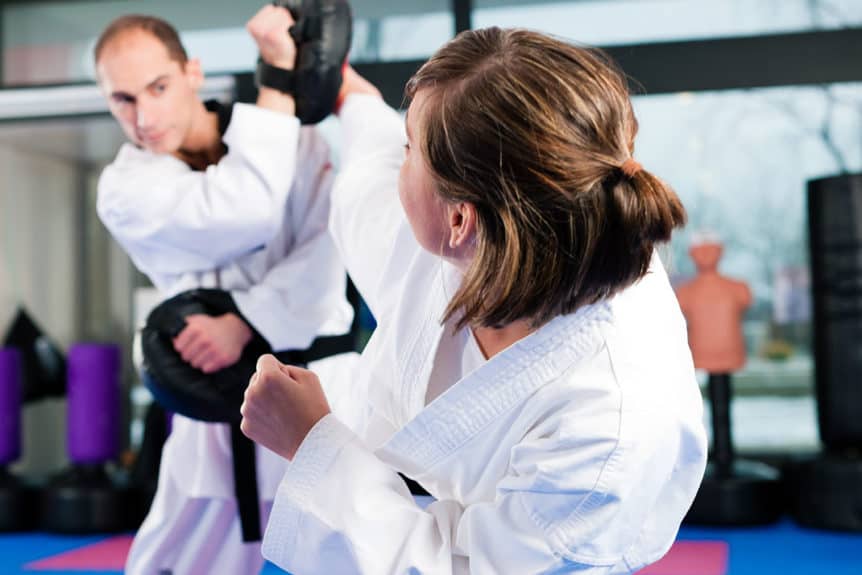
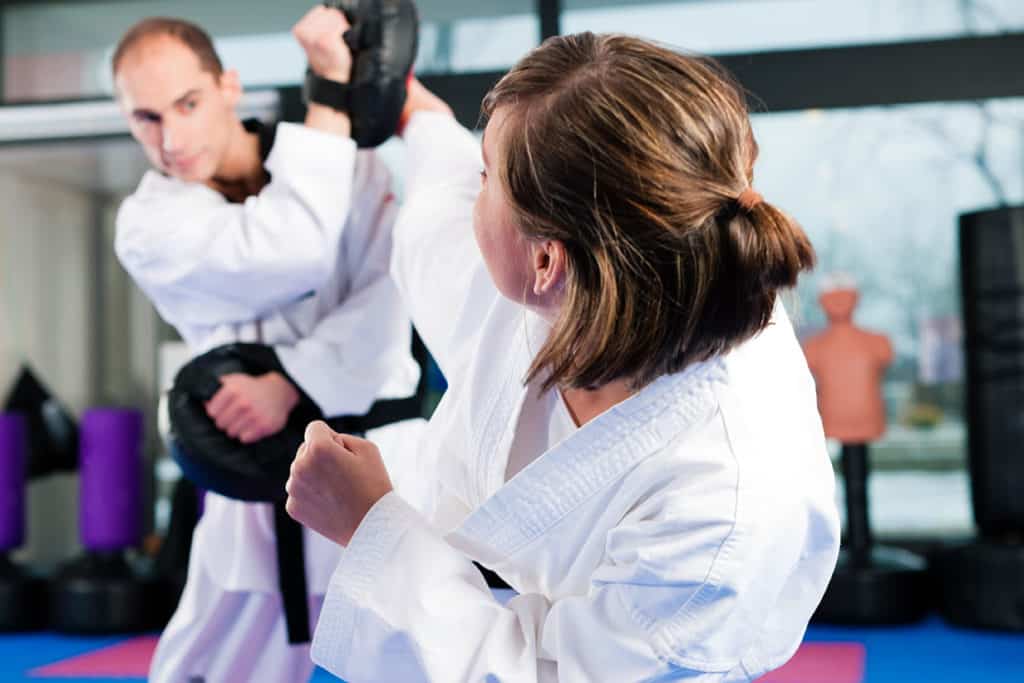
To do a roundhouse kick in taekwondo, start in a fighting stance, lift the knee of the rear leg into a chamber, turn on the ball of the supporting foot as the hip rolls over, then snap the lower leg out to strike with the instep and pull it straight back. Keep your hands up the whole time. The roundhouse kick, called dollyeo chagi in Korean, is the most used kick in taekwondo sparring and one of the first kicks beginners learn. Small details at each step decide how fast and how hard it lands.
| Korean name | Dollyeo chagi (돌려차기), “turning kick”; ITF spelling dollyo chagi |
|---|---|
| Striking surface | Instep (top of the foot) in sparring; ball of the foot in some forms and breaking |
| Key steps | Stance, chamber, pivot, hip turn, snap, recoil |
| Targets | Body (momtong) and head (eolgul) |
| Sparring points (World Taekwondo) | 2 for a kick to the body, 3 to the head |
| Main difference from Muay Thai | Taekwondo chambers and snaps the lower leg; Muay Thai swings through with the shin |
Step by step
How to do a roundhouse kick, step by step
Step 1
Fighting stance
Stand side-on, feet about shoulder width or a little wider, knees bent, weight on the balls of the feet, hands up.
Step 2
Chamber
Lift the knee of the rear leg, heel tucked toward the buttock. The knee points at the target and sets the height of the kick.
Step 3
Pivot
Turn on the ball of the supporting foot so the heel swings toward the target. The more you turn, the more the hip can open.
Step 4
Turn the hip
Roll the kicking hip over so the knee and foot travel on a horizontal line instead of upward.
Step 5
Snap and strike
Extend the lower leg fast and hit with the instep, toes pointed, aiming to kick through the target. Breathe out as you strike.
Step 6
Recoil and land
Pull the foot back to the chamber, then set it down in a balanced stance, ready to kick again or defend.
The chamber, pivot and hip turn happen almost together in a fast kick, but practice them separately at first. Without the pivot the hip cannot turn; without the hip turn the kick comes up at an angle like a front kick and loses power. Keep the upper body upright enough to see the target, and keep the guard hand near your face. Dropping the hands during the kick is the habit opponents punish most.
For the stance itself, see taekwondo stances. For the Korean names of this and other kicks, see taekwondo terminology.
Striking surface
Which part of the foot to hit with
| Surface | Where it is used | Notes |
|---|---|---|
| Instep (baldeung) | Sparring, pads, most class drills | Point the toes. In competition the foot is covered by a sock or foot protector. |
| Ball of the foot (apchuk) | Some forms, breaking, traditional self-defense | Pull the toes back so they do not jam. Hits a smaller area with more pressure. |
| Shin | Muay Thai and kickboxing roundhouse | Not the taekwondo method; it goes with a different swinging style of kick. |
Tip
Hitting an elbow or knee with the instep can hurt the small bones of the foot. Wear foot protectors for partner work and keep kicks on the pads or the body protector.
Height
Middle and high roundhouse kicks
The height of the chamber decides the height of the kick. For a middle kick to the body (momtong dollyeo chagi), lift the knee to about waist height. For a high kick to the head (eolgul dollyeo chagi), lift the knee toward the chest and turn the supporting foot further so the hip can open. High kicks need more hip flexibility and balance, so build up the height over weeks, not in one session.
- Body kick: knee at waist height, quick and safe, scores 2 points in World Taekwondo sparring.
- Head kick: knee toward the chest, more pivot, scores 3 points.
- Low kicks to the legs are not allowed in World Taekwondo sparring.
Stance
The fighting stance for a good roundhouse
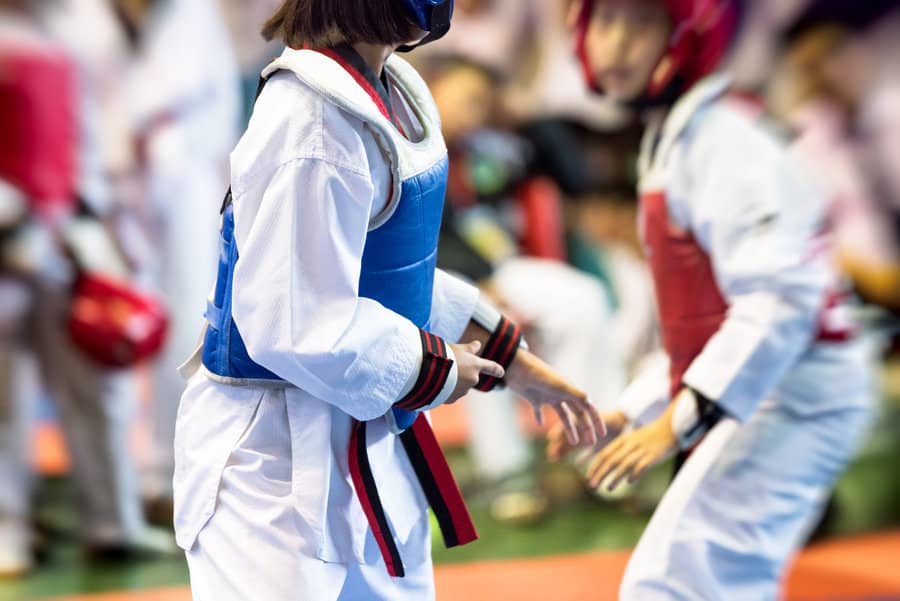
- Feet about shoulder width apart, a little wider for taller students.
- Knees slightly bent so you can push off at once.
- Weight on the balls of the feet, not flat-footed.
- Body turned side-on, which shortens the turn needed for the rear-leg kick.
- Hands up, front hand forward, rear hand near the chin.
A stance that is too wide slows the chamber; one that is too narrow costs balance when you pivot.
Mistakes
Common roundhouse kick mistakes
- No pivot on the supporting foot, which locks the hip and twists the knee.
- Knee pointing upward instead of at the target, so the kick rises like a front kick.
- Dropping the hands as the leg goes out.
- Leaning far back to reach height, which kills balance and telegraphs the kick.
- Stopping at the surface instead of kicking through the target.
- Letting the leg fall after the strike instead of recoiling to the chamber.
- Holding the breath instead of breathing out on the strike.
Other martial arts
Roundhouse kick in taekwondo, karate and Muay Thai
| Taekwondo | Karate | Muay Thai | |
|---|---|---|---|
| Name | Dollyeo chagi | Mawashi geri | Te tad (roundhouse) |
| Chamber | Knee up first, then turn | Knee chambered to the side | Little or no chamber |
| Power from | Hip turn plus a snap of the lower leg | Hip turn plus a snap | Rotation of the hips and supporting leg |
| Strikes with | Instep or ball of the foot | Ball of the foot or instep | Shin |
| After the kick | Recoil to the chamber | Recoil to the chamber | Swing through and turn |
More on how the styles differ: taekwondo vs kickboxing.
Drills
Drills to improve your roundhouse kick
- Step kicks: on a count of four, chamber, extend, recoil and set down. Slow repetitions build the pattern.
- Supported kicks: hold a wall or chair and kick slowly, checking the pivot and the hip turn.
- Leg swings: controlled swings forward and to the side to warm the hips before kicking.
- Kicks for reps: 10 kicks on one leg, then switch; work up to several sets on each leg.
- Paddle and bag work: a partner holds a target and calls “go”; kick as fast as you can, then reset.
- Kick from movement: step, slide or switch feet, then kick, the way the kick is used in sparring.
More training ideas: how to get faster kicks and taekwondo footwork drills.
Flexibility and strength
Flexibility and strength for higher, harder kicks
Note
This is general information, not medical advice. Warm up before stretching or kicking, build height and load gradually, and stop if a movement causes pain.
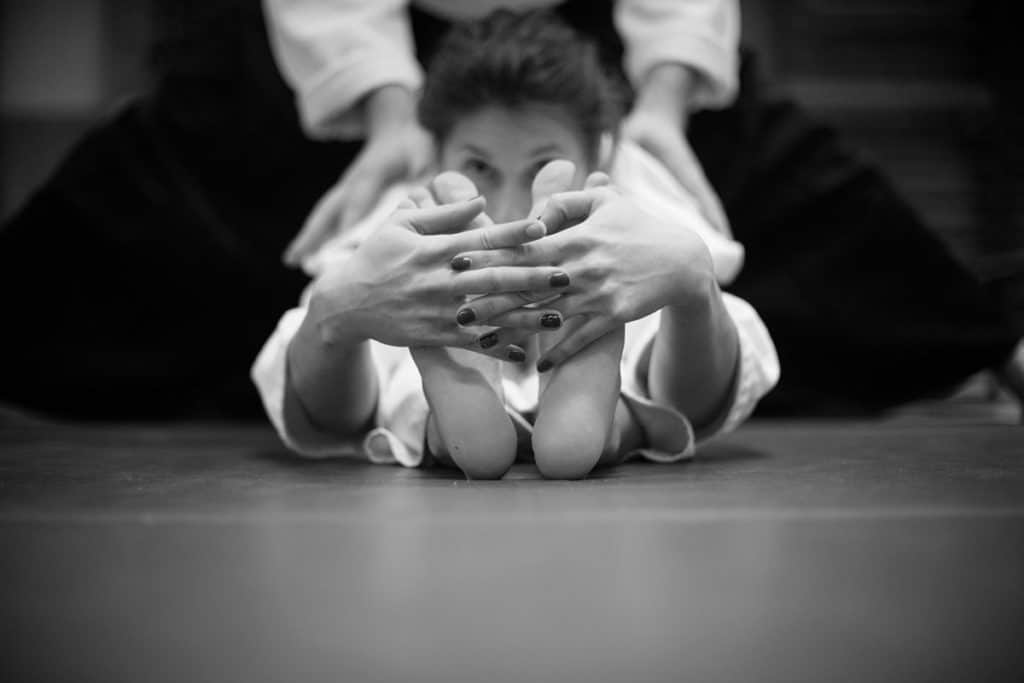
- Dynamic stretching before training: leg swings and slow kicks raise the hips and hamstrings through the range you kick in.
- Static stretching after training: side splits and hip stretches held for about 15 to 30 seconds.
- Leg strength: squats and lunges build the legs that drive the kick; start light and focus on form.
- Explosive work: short sprints and jumps train fast, powerful movement.
- Balance: single-leg holds and slow chambered kicks build control on the supporting leg.
Related guides: dynamic vs static stretching, warm-up exercises, yoga for taekwondo and strength training.
Counters
How to counter a roundhouse kick
- Straight kick to the body: a side kick or front kick travels a shorter line and can land while the roundhouse is still swinging.
- Step back and counter: let the kick pass, then answer with your own roundhouse while the opponent’s guard is open.
- Back kick: as the opponent turns into the kick, a back kick goes straight to the open body.
- Body punch: close the distance and punch the body; punches to the head are not allowed in World Taekwondo sparring.
For more on sparring tactics, see the taekwondo sparring guide, and for the other basic kicks, the full list of taekwondo kicks.
FAQ
Frequently asked questions
What is the roundhouse kick called in taekwondo?
Dollyeo chagi (돌려차기), which means turning kick. ITF schools spell it dollyo chagi. Many schools also call it a round kick.
What part of the foot do you hit with in a taekwondo roundhouse kick?
The instep in sparring and pad work. Some forms and breaking techniques use the ball of the foot with the toes pulled back.
Do you pivot on a roundhouse kick?
Yes. Turning on the ball of the supporting foot lets the hip open and the kick travel level, and it takes strain off the knee.
Why does my roundhouse kick lack power?
The usual causes are no pivot, no hip turn, a knee that points upward instead of at the target, or stopping at the surface instead of kicking through it.
Can you kick to the head with a roundhouse in taekwondo sparring?
Yes. In World Taekwondo sparring a roundhouse to the head scores 3 points and a kick to the body protector scores 2.
How is a taekwondo roundhouse different from a Muay Thai roundhouse?
Taekwondo chambers the knee, snaps the lower leg and hits with the foot, then recoils. Muay Thai swings the leg through with little chamber and hits with the shin.
The short version
From a fighting stance, chamber the rear knee toward the target, pivot on the supporting foot, roll the hip over, snap the lower leg out to hit with the instep, then recoil and land in balance. Keep the hands up and breathe out on the strike. Practice slowly at first, then add speed, height and movement.